Best Sleeping Direction as Per Vastu: Complete Scientific Guide
In this comprehensive guide, we reveal the best sleeping direction as per Vastu Shastra backed by modern science. Discover why sleeping South can lower your blood pressure, why students should face East, and the scientific reason you must strictly avoid sleeping North
In this guide
- 1. Why Sleeping Direction Matters in Vastu
- 2. The Science Behind Vastu Sleeping Directions
- 3. Complete Direction Rankings: Best to Worst
- 4. South Direction: The Gold Standard
- 5. East Direction: Best for Students and Scholars
- 6. West Direction: When It Works
- 7. North Direction: Why You Must Avoid It
- 8. Sleeping Directions for Different People
- 10. Southern Hemisphere Considerations
- 11. Bed Placement and Bedroom Layout
- 12. Common Sleeping Direction Mistakes
- 13. How to Change Your Sleeping Direction
- 14. Frequently Asked Questions
Are you waking up tired despite sleeping 8 hours? Do you suffer from unexplained headaches, restless nights, or chronic fatigue? According to Vastu Shastra, the ancient Indian science of architecture, the direction in which you sleep could be the hidden culprit.
This comprehensive guide reveals the science behind Vastu sleeping directions, backed by both traditional wisdom and modern understanding of Earth's magnetic fields. Whether you're in India, Australia, the UK, USA or anywhere else in the world, you'll discover exactly which direction optimizes your sleep quality, health, and overall well-being.
Here is a brief video summary explaining best sleep directions according to Vastu.
Table of Contents
- Why Sleeping Direction Matters in Vastu
- The Science Behind Vastu Sleeping Directions
- Complete Direction Rankings: Best to Worst
- South Direction: The Gold Standard
- East Direction: Best for Students and Scholars
- West Direction: When It Works
- North Direction: Why You Must Avoid It
- Sleeping Directions for Different People
- Direction Based on Health Conditions
- Southern Hemisphere Considerations
- Bed Placement and Bedroom Layout
- Common Sleeping Direction Mistakes
- How to Change Your Sleeping Direction
- Frequently Asked Questions
1. Why Sleeping Direction Matters in Vastu
Vastu Shastra, dating back over 5,000 years, recognizes that our bodies are constantly interacting with the Earth's energy fields. During sleep, when our conscious defenses are down, we become particularly receptive to these environmental influences.
The direction in which you position your head while sleeping determines how your body aligns with Earth's magnetic field. This alignment affects blood circulation, brain function, and the quality of your rest. Ancient Vastu texts describe this energy as 'Jaivic Urja' (organic energy), which flows in specific patterns around the Earth.
Aspect Affected
How Direction Impacts It
Sleep Quality
Wrong direction causes magnetic interference, leading to restless sleep and frequent waking
Blood Circulation
Head position affects blood flow to the brain due to iron content in blood
Mental Health
Proper alignment reduces anxiety, nightmares, and mental tension
Physical Health
Long-term wrong sleeping direction linked to blood pressure issues and heart problems
Energy Levels
Correct direction ensures you wake refreshed with sustained energy throughout the day
2. The Science Behind Vastu Sleeping Directions
The Magnetic Theory Explained
The Earth functions as a giant magnet with magnetic flux flowing from the North Pole to the South Pole. Similarly, the human body has its own magnetic properties, with the head acting as the North Pole and the feet as the South Pole. This is due to the iron content in our blood (hemoglobin).
The fundamental principle is simple: like poles repel, and opposite poles attract.
Head Direction
Magnetic Interaction
Effect on Body
Result
South
Head (North) meets Earth's South Pole
Attraction - Harmonious
Deep, restorative sleep
East
Neutral - Solar alignment
Balanced energy flow
Enhanced memory, focus
West
Neutral - Sunset energy
Moderate energy
Acceptable sleep
North
Head (North) meets Earth's North Pole
Repulsion - Disruptive
Disturbed sleep, health issues
What Happens When You Sleep Head-North?
When your head points North, it creates magnetic repulsion with Earth's North Pole. This repulsion affects blood circulation, as the iron in your blood responds to magnetic forces. The result is increased blood pressure to the brain, causing headaches, mental tension, and disturbed sleep. In traditional Indian culture, only deceased persons are laid with their head towards the North.

3. Complete Direction Rankings: Best to Worst
Direction
Best For
Key Benefits
Rating
1st
SOUTH
Adults, couples, elderly, anyone with health issues
Deep sleep, longevity, prosperity, reduced BP
⭐⭐⭐⭐⭐
2nd
EAST
Students, scholars, children, spiritual seekers
Enhanced memory, concentration, spiritual growth
⭐⭐⭐⭐⭐
3rd
WEST
Business people, when other options unavailable
Material success, acceptable alternative
⭐⭐⭐
4th
NO ONE - Strictly avoid
Associated with death, health problems
⭐ AVOID
4. South Direction: The Gold Standard
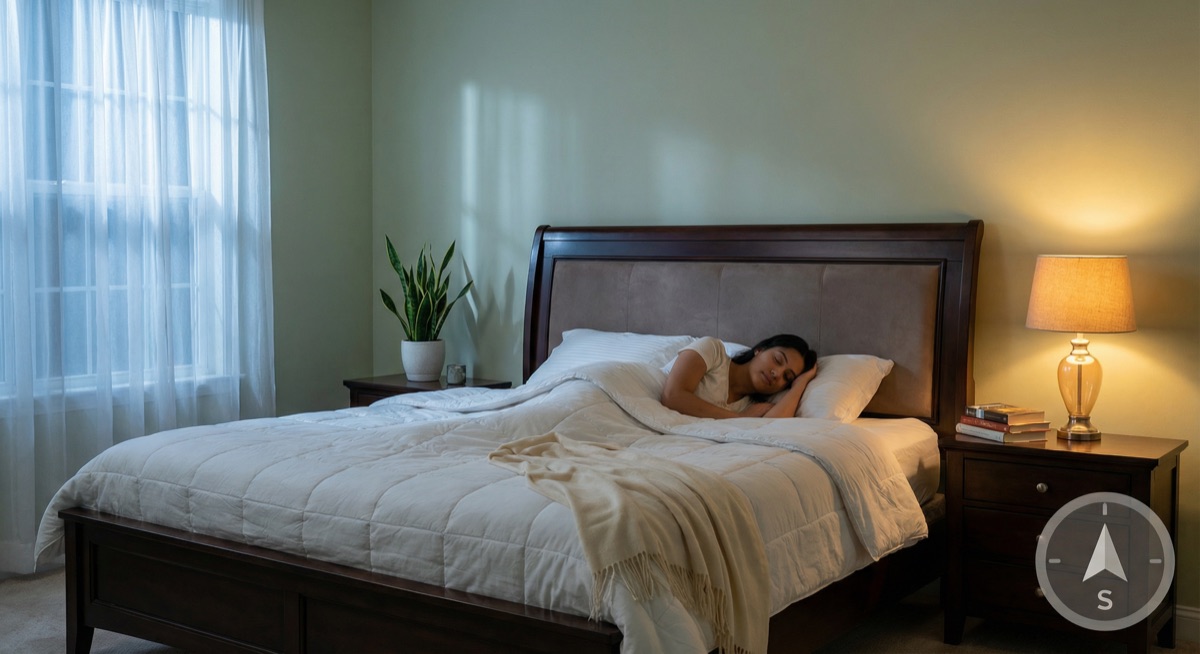
Sleeping with your head towards the South is considered the most beneficial direction in Vastu Shastra. This position creates magnetic harmony between your body and the Earth, allowing for optimal rest and rejuvenation.
Benefits of South-Facing Sleep:
Benefit
Deep, Restorative Sleep
Magnetic attraction promotes relaxation and uninterrupted sleep cycles
Lower Blood Pressure
Proper blood flow to the brain reduces hypertension risk
Reduced Anxiety
Harmonious energy flow calms the nervous system
Longevity
Ancient texts associate South sleeping with increased lifespan
Better Digestion
Improved circulation aids digestive processes during rest
Prosperity
South is ruled by Yama (god of dharma), bringing righteous wealth
Who Should Sleep Head-South?
• All adults (especially those over 40)
• People with blood pressure issues
• Those suffering from insomnia or sleep disorders
• Individuals with heart conditions
• Anyone experiencing chronic fatigue
• Couples (both partners should face South)
• Elderly individuals
• People recovering from illness
5. East Direction: Best for Students and Scholars
The East direction holds special significance as the source of sunrise and solar energy. Sleeping with your head towards the East aligns you with the rising sun's energy, promoting mental clarity, memory enhancement, and spiritual growth.
Benefit
Enhanced Memory
Solar alignment stimulates cognitive functions and recall
Better Concentration
Rising sun energy promotes focus and mental clarity
Spiritual Growth
East is associated with enlightenment and wisdom
Early Rising
Natural alignment with sunrise makes waking easier
Academic Success
Ideal for students preparing for exams
South vs East: Which to Choose?
Factor
Choose South
Choose East
Age
Adults, elderly
Children, young adults
Priority
Health, rest, recovery
Learning, memory, focus
Profession
Physical work, recovery
Students, researchers, scholars
Health Status
Any health issues
Generally healthy
6. West Direction: When It Works
While not ideal, the West direction is considered acceptable when South or East options are unavailable. It is magnetically neutral and associated with material success and worldly achievements.
Potential Benefits
Potential Drawbacks
Associated with name, fame, reputation
May cause initial restlessness
Good for business-minded individuals
Some report vivid or disturbing dreams
Promotes material success
Not recommended for students
Acceptable third choice
May cause slight lethargy upon waking
Tip: If you must sleep West due to room constraints, place a small copper pyramid under your bed to help neutralize any negative effects.
7. North Direction: Why You Must Avoid It
⚠️ IMPORTANT: Never sleep with your head pointing North. This is the single most important Vastu guideline for sleeping.
Why North is Dangerous:
When your head (your body's North Pole) faces Earth's North Pole, magnetic repulsion occurs. This creates a constant push against your blood flow, as the iron in your hemoglobin responds to magnetic forces. The result is increased pressure in the brain and disrupted circulation.
Symptom/Effect
Disturbed Sleep
Magnetic repulsion prevents deep sleep cycles
Nightmares
Brain under stress produces disturbing dreams
Headaches
Increased blood pressure to the brain
Blood Pressure Issues
Long-term exposure can lead to hypertension
Mental Instability
Chronic sleep disruption affects mental health
Fatigue
Non-restorative sleep leaves you exhausted
Anxiety/Depression
Prolonged magnetic stress affects mood
Cultural Significance: In Indian tradition, only deceased persons are laid with their head towards the North. This direction is associated with Yama, the god of death. Sleeping North is considered inauspicious for the living.
If You Absolutely Cannot Avoid North:
• Place a wooden headboard between your head and the North wall
• Keep a copper plate under your pillow
• Use a thick mattress to create distance from the floor
• Place Vastu pyramids in the North corners of the room
• Plan to change rooms or reorganize as soon as possible
8. Sleeping Directions for Different People
For Couples:
Both partners should sleep with their heads towards the South. The husband should sleep on the right side of the wife (when lying down). This arrangement promotes harmony, mutual respect, and a healthy relationship. The wife's position on the left is associated with receiving loving energy.
By Age Group:
Age Group
Reason
Children (0-12)
East
Promotes growth, learning, and brain development
Teenagers (13-19)
East
Supports academic performance and concentration
Young Adults (20-40)
South or East
Based on career (students: East, others: South)
Middle Age (40-60)
South
Promotes health maintenance and stress relief
Healthcare Workers, Doctors
Restorative sleep for demanding schedules
Athletes, Physical Workers
South
Muscle recovery and stamina
For Pregnant Women:
Pregnant women should sleep with their head towards South or East, and NEVER towards the North. The South direction promotes the health of both mother and baby, while East supports fetal brain development. Additionally, sleeping on the left side is medically recommended during pregnancy.
- Direction Based on Health Conditions
Health Condition
Why It Helps
High Blood Pressure
South
Reduces cranial pressure
Heart Disease
South
Promotes healthy circulation
Insomnia
South
Magnetic harmony aids relaxation
Anxiety/Stress
South
Calms nervous system
Depression
East
Solar energy uplifts mood
Memory Issues
East
Enhances cognitive function
Digestive Problems
East
Improves metabolic function
Chronic Fatigue
South
Deep restorative sleep
Migraines
South
Reduces brain pressure
Respiratory Issues
East
Fresh morning energy
10. Southern Hemisphere Considerations
A common question: Do Vastu sleeping directions change for countries like Australia, New Zealand, South Africa, or South America?
The Answer: No, the directions remain the same.
Here's why: The Earth's magnetic poles (North and South) are the same regardless of which hemisphere you're in. The magnetic flux flows from North to South globally. Your body's polarity (head = North, feet = South) also doesn't change based on location. Therefore, sleeping with your head towards the geographic South remains beneficial everywhere on Earth.
Aspect
Northern Hemisphere
Southern Hemisphere
Best Direction
South
South
Second Best
East
East
Acceptable
West
West
Avoid
North
North
Reason
Magnetic pole alignment
Same magnetic principles apply
11. Bed Placement and Bedroom Layout
Beyond direction, the placement of your bed within the room also affects sleep quality according to Vastu principles.
Ideal Bedroom Locations:
Zone
Rating
Notes
Southwest
⭐⭐⭐⭐⭐ Best
Master bedroom ideal location, promotes stability
South
⭐⭐⭐⭐ Good
Good for adults and elderly
West
⭐⭐⭐ Acceptable
Can be used for guest bedrooms
Northwest
⭐⭐ Use with Care
Good for guests, not recommended for master bedroom
Northeast
Keep this zone light and open, not for heavy furniture
Bed Positioning Rules:
• Place the bed so the headboard touches the South or East wall
• Maintain at least 3-4 inches gap between bed and wall for energy flow
• Avoid placing the bed directly under a beam (causes pressure)
• Keep the bed away from the bedroom door alignment
• Avoid positioning feet directly towards the door
• Don't place the bed in the center of the room
• Ensure you can see the bedroom door from the bed
• Avoid mirrors facing the bed directly
Elements to Avoid in the Bedroom:
• Electronic devices near the head (EMF interference)
• Water features or aquariums
• Plants (release CO2 at night)
• Exercise equipment
• Work desks or office materials
• Mirrors facing the bed
• Sharp-edged furniture pointing at the bed
• Clutter under the bed
Recommended Bedroom Colors:
Light shades of blue, green, pink, or off-white are ideal for bedrooms. Avoid bright red, dark colors, or excessive black. These colors promote calm and restful energy.
12. Common Sleeping Direction Mistakes
Correct Approach
Confusing magnetic North with true North
Use a compass app to find true geographic directions, not magnetic North
Thinking Southern Hemisphere reverses rules
Same principles apply globally - South is always best
Placing bed diagonally
Bed should be parallel to walls, headboard against South or East wall
Ignoring beam placement
Never sleep directly under a beam - it creates negative pressure
Feet pointing at door
Reposition bed so feet don't align directly with the door (death position)
Mirror facing bed
Remove or cover mirrors that reflect the sleeping person
Electronics near head
Keep phones, chargers, and devices at least 3 feet from head
Blocking Brahmasthan
Keep the center of the room clear and open for energy flow
13. How to Change Your Sleeping Direction
If you discover you've been sleeping in the wrong direction, here's how to transition smoothly:
Step-by-Step Transition:
- Determine true directions using a reliable compass (smartphone apps work well)
- Evaluate if your current bed can be repositioned
- If major furniture moving is needed, do it on an auspicious day (consult Panchang)
- Clean the room thoroughly before repositioning
- Consider the 'gradual shift' method if sudden change is difficult:
• Week 1-2: Sleep at a 45-degree angle towards South
• Week 3-4: Complete the shift to full South
- Give yourself 2-3 weeks to adjust to the new orientation
- Observe and journal any changes in sleep quality
When You Can't Move the Bed:
If room constraints prevent repositioning:
• Use Vastu remedies (copper pyramids, specific crystals)
• Place a wooden headboard to create a barrier
• Consider using the guest room if it has better Vastu
• Plan for room changes when renovating
• Focus on other Vastu improvements in the home
📐 Need a Complete Home Analysis?
14. Frequently Asked Questions
Q: Can I sleep with my head towards Southeast or Southwest?
A: Southeast combines South (good) with East (good), making it acceptable. Southwest combines South (best) with West (neutral), which is also acceptable. Both are better than North or Northeast. However, pure South or East is preferred when possible.
Q: What if my partner wants to sleep in a different direction?
A: Both partners should ideally sleep in the same direction for relationship harmony. South is the best compromise for couples. If one partner is a student, they might benefit from East, but South works well for everyone.
Q: Does the material of the bed frame matter?
A: Yes. Wood is the most recommended material as it's natural and doesn't interfere with energy flow. Metal frames can conduct electromagnetic energy. Avoid beds with extensive metal components near the head area.
Q: I live in an apartment and can't change room layouts. What can I do?
A: Focus on what you can control: reposition the bed within the room, use Vastu remedies (copper pyramids, specific plants outside the bedroom, proper colors), and ensure other Vastu principles are followed. Even partial compliance is better than none.
Q: How long before I notice improvements after changing direction?
A: Most people report noticeable improvements within 2-4 weeks. Initial adjustments might feel different as your body adapts. Long-term benefits for health and prosperity typically manifest over 3-6 months of consistent practice.
Q: Is Vastu sleeping direction the same as Feng Shui?
A: While both systems address energy flow, they have different origins and approaches. Vastu Shastra is based on Vedic principles and considers Earth's magnetic field. Feng Shui is Chinese and focuses on chi energy. Some recommendations align, but they are distinct sciences.
Q: What about sleeping on the floor vs. a bed?
A: The direction principle remains the same whether you sleep on a bed or the floor. However, sleeping slightly elevated (on a bed) is recommended to avoid ground-level moisture and energy. If sleeping on the floor, use a thick mattress and ensure cleanliness.
Q: Do these rules apply for naps during the day?
A: Yes, the magnetic principles apply regardless of time. For short naps, East is particularly beneficial as it aligns with solar energy during the day. Avoid North even for brief rest periods.
Ready to Transform Your Sleep and Life?
Remember: Small changes in your sleeping direction can lead to significant improvements in your health, relationships, and prosperity. The ancient wisdom of Vastu Shastra, now accessible through modern AI technology, is here to guide you towards a more harmonious life.
Vastu Brahmasthan: The Ultimate A-Z Guide to Your Home's Sacred Centre
Discover the Vastu Brahmasthan, your home's sacred centre. Learn what blocks energy flow, proven remedies, and how to activate this powerful zone. Free analysis.
By Savan Vyas 21 Jan 2026